Ethan Caflisch has lived many lives in the past decade — from the California art scene to six years in London, where he’s now officially a citizen. He’s someone who can find a sense of belonging anywhere, while still carrying a perspective uniquely his own — a quality he embraces in both life and art.
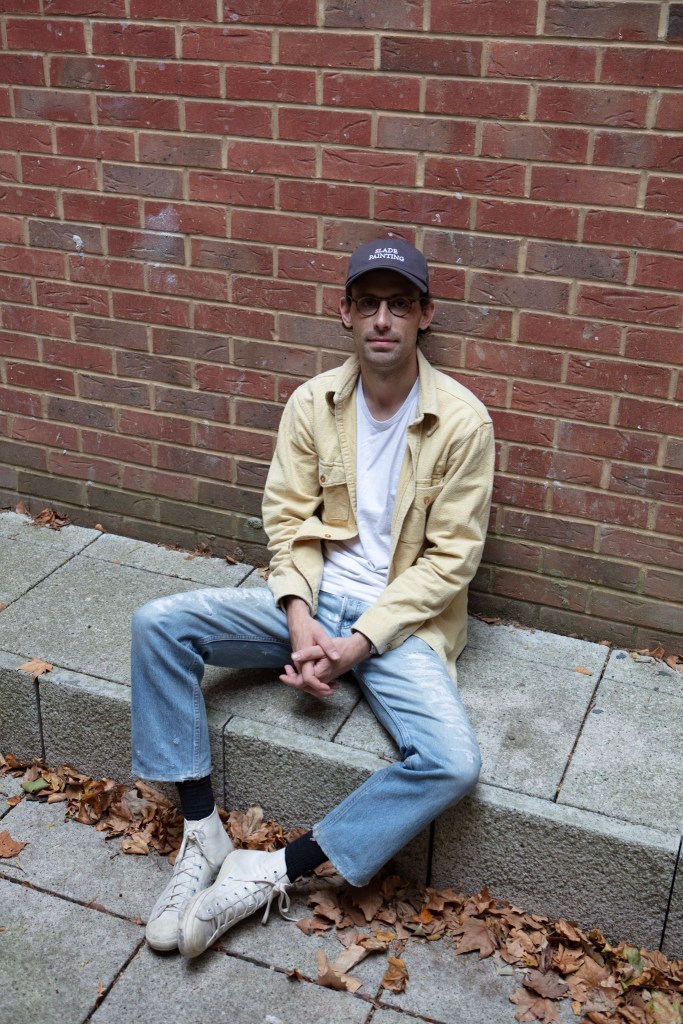
We talk on a video call — him in his London studio, me in California. Our conversation drifts easily between life choices, relationships, and the way an object’s story changes once it’s deemed “no longer useful.” That’s where much of Ethan’s work begins: the moment after something is discarded.

“The overarching theme of my work is repair,” he says. “Taking things that were once together, separated, discarded — and turning them into something beautiful.”
Leaving Comfort for the Unknown
Ethan left California in his mid-twenties, not because it wasn’t good, but because it was too good — too comfortable.

“If we didn’t leave then, we might have been stuck there forever,” he tells me. New York was the original destination, but life rerouted him back to California before he eventually landed in London. What started as a plan to expand his art-world connections became something bigger: a new foundation, a new way of seeing, and a growing body of work rooted in the subtle interplay between permanence and change.
The Studio as His Greatest Unseen Work
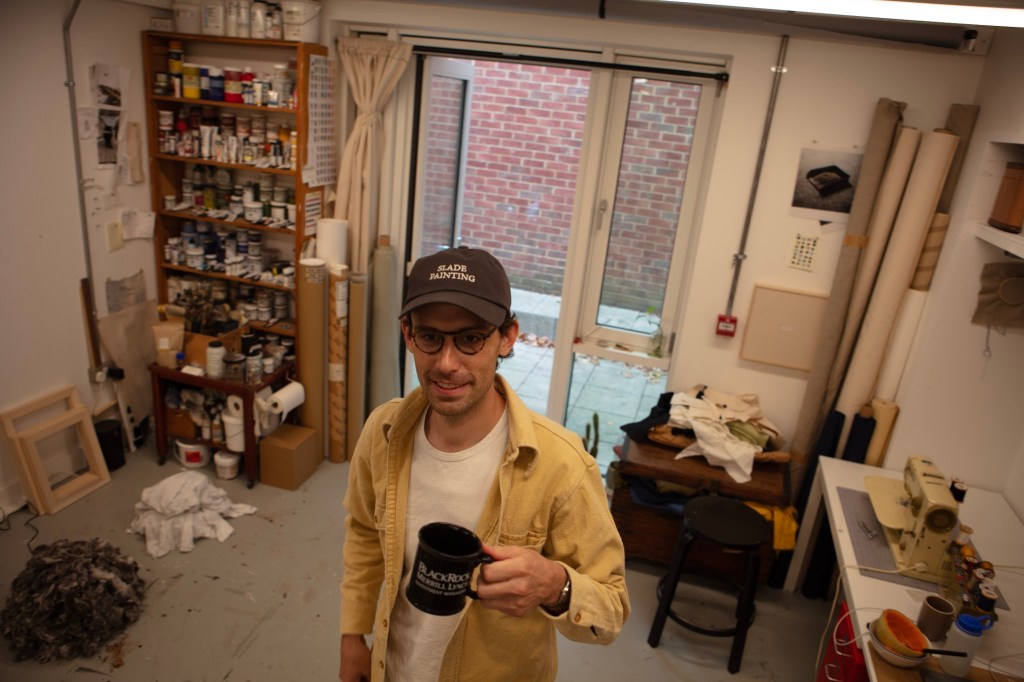
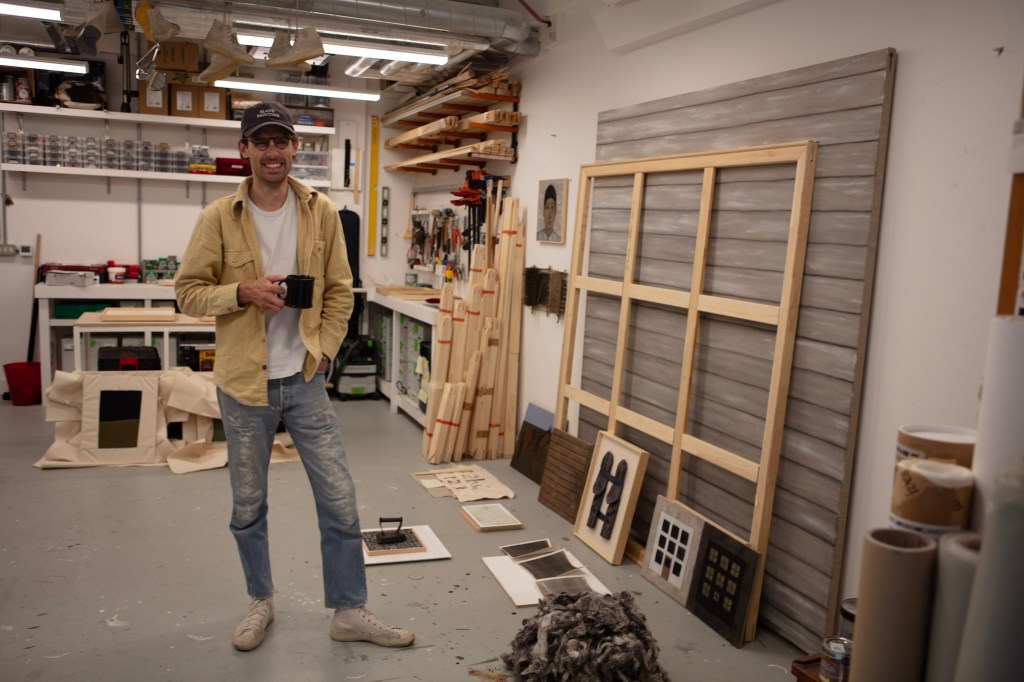
Ethan’s studio is his quiet masterpiece — a space optimized for efficiency and flow. He treats it like a living artwork that never appears in a gallery. It’s not just a place to make work; it’s part of the work itself.
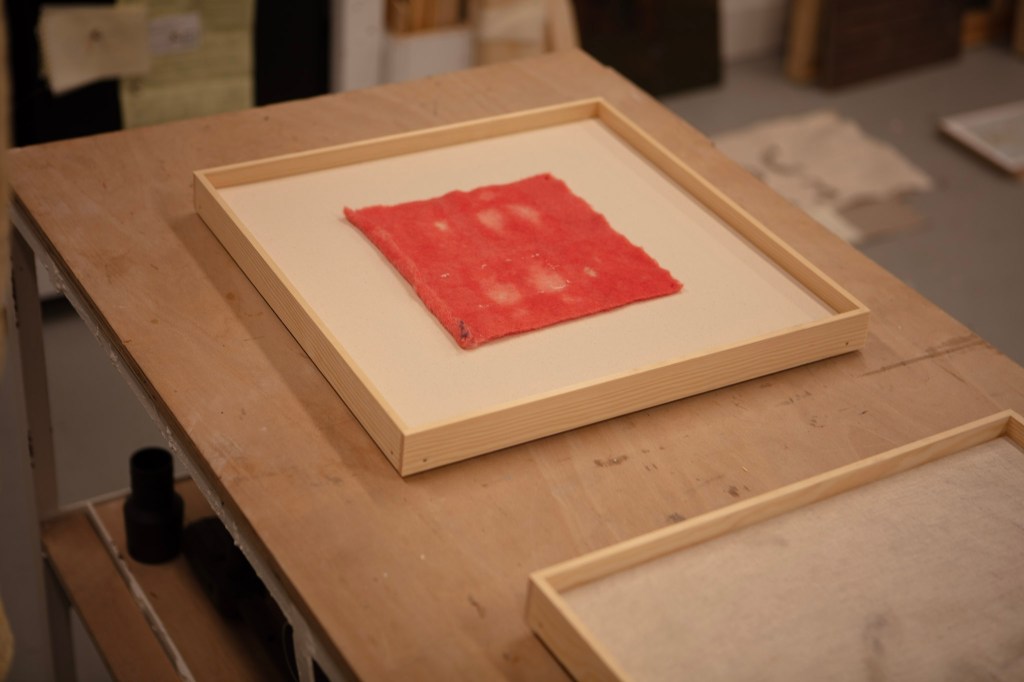
That deep attention to space parallels how he treats materials. Whether it’s pistachio shells, worn sneakers, or threadbare socks, he collects the overlooked and reassembles them into pieces that carry new meaning.
Pistachio Shells and Emotional Weight
One piece in particular stays with me: a floor-based sculpture built from pistachio shells Ethan had eaten, saved, dyed, and arranged in a grid. At first glance, you might think they’re seashells. Then you realize they’re leftovers — things most of us toss without a thought.

The work was born during the slow unraveling of a long-term relationship.
“I was trying to tap into emotions I’d historically bottled up,” Ethan says. “Especially sadness. The pistachio shells felt like the conversations we kept having over and over — split, discarded, but still worth holding onto and reshaping.”
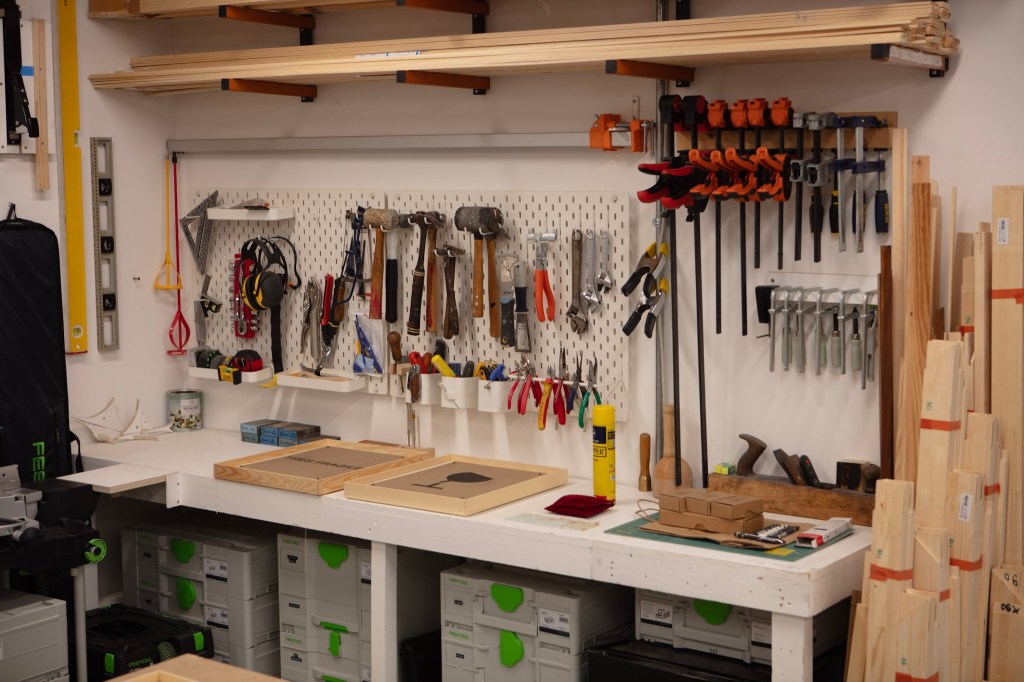
It’s about heaviness — emotional and physical — and the cyclical nature of what we keep versus what we let go.
Socks, Sneakers, and the Objects That Carry Us
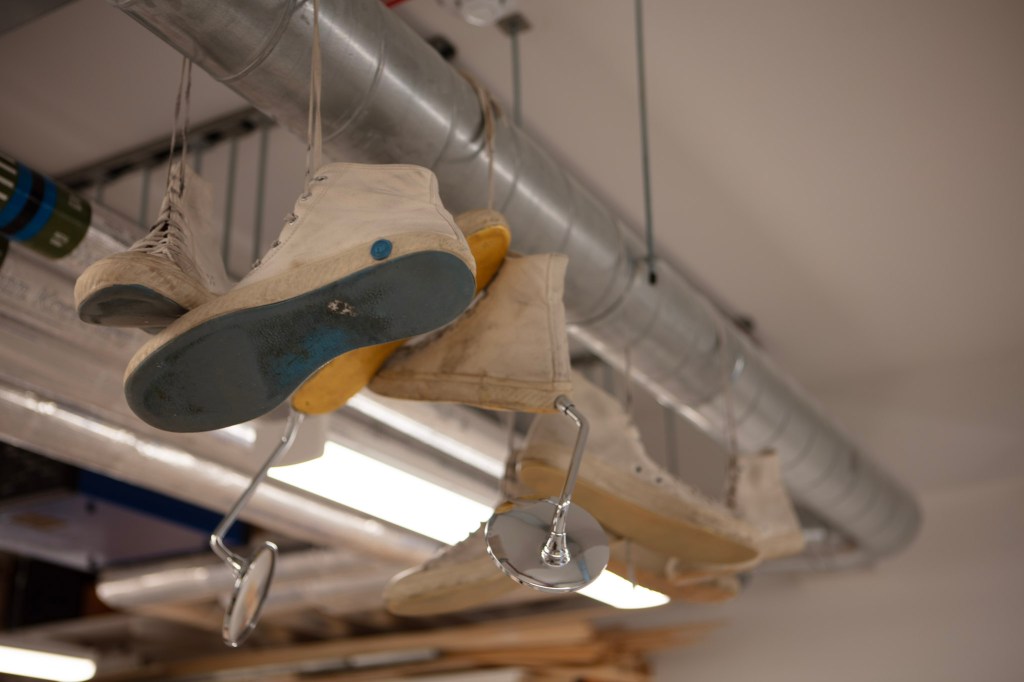
Many of Ethan’s pieces memorialize items that have carried him — literally. His sneaker series, ongoing for over a decade, transforms worn-out shoes into sculptures, sometimes with gold leaf on the soles. His sock works — repaired until they’re no longer wearable — are stretched and framed like preserved specimens.
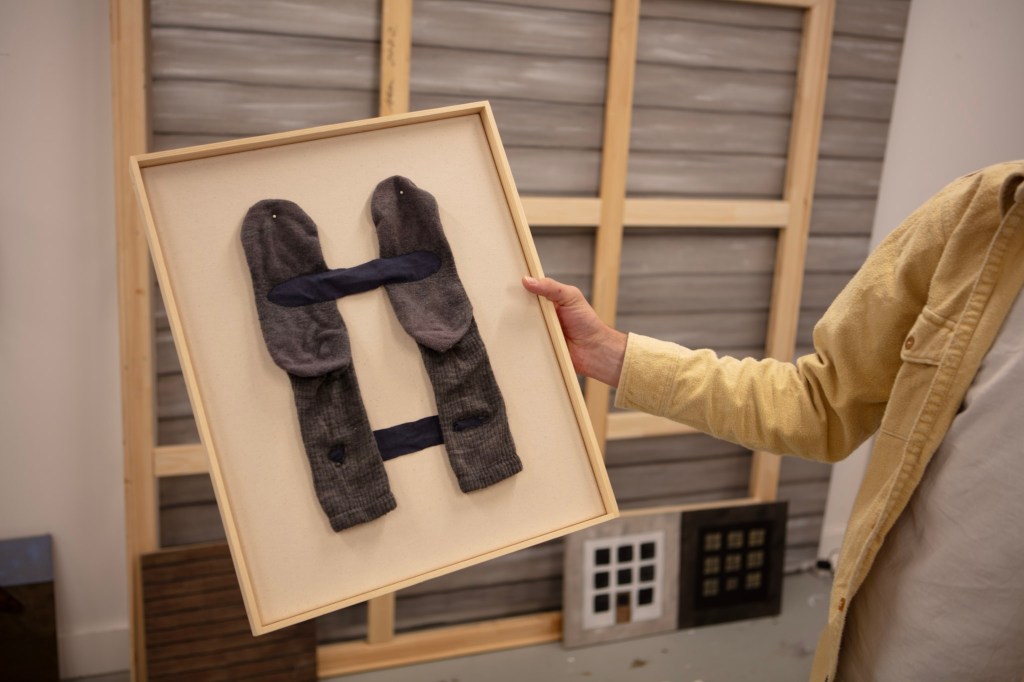
Both series balance humor and reverence. They elevate the utilitarian to the symbolic, prompting questions about value, attachment, and the stories objects accumulate simply by being part of our lives.
Ghost Prints and Unfinished Sentences
Not all of Ethan’s work is instantly decipherable. A painting titled Checking the Obituaries Again features faint boot prints, barely visible in black-on-black paint and charcoal. It’s ghostly, almost evasive. The title guides you, but never explains everything.
He likes it that way.
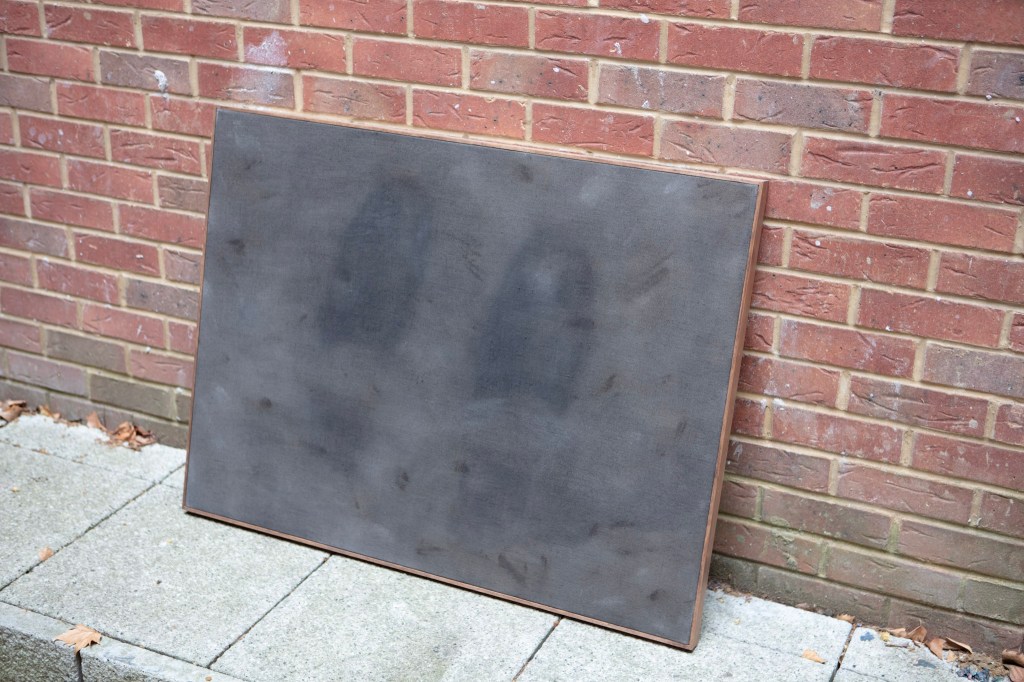
“My work is meant to be an incomplete sentence,” he says. “The gaps are for the viewer to fill in however they need to.”
It’s an approach that resists the overly prescriptive tendencies of art school critiques. Instead of telling you what to see, Ethan invites you into a conversation — one that shifts depending on who’s looking.
Cycles, Sound, and Willie Nelson
In another piece, Phases and Stages, Circles and Cycles — named after a Willie Nelson album — Ethan stitched imperfect circles of embroidery thread over painted speaker grills. The speakers played five Nelson songs on repeat.
It’s part sculpture, part sound piece, part meditation on relationships. The music loops endlessly, the thread circles almost perfect but not quite — a reminder that beauty often lies in the slight departures from symmetry.
Underwater in the Rain
Last year, Ethan’s exhibition Underwater in the Rain became, in his words, a “breakup show.” The works — from a restored vintage tricycle playing a Super 8 film to found postcards and recurring patterns — explored thresholds: the point where something can be repaired, and the moment it can’t.

The show’s title, like much of his work, balances poetry and pragmatism. Relationships, like objects, wear down. Sometimes they can be fixed. Sometimes they’re left as beautiful remnants of what once was.
Art Without Pretension
Despite the conceptual layers in his work, Ethan wants it to be approachable. Pieces like his framed socks invite people to lean in, to examine closely, even to laugh.

“I want to make the art world less pretentious,” he says. “More inviting. More human.”
It’s that human quality — the willingness to honor the discarded, to celebrate the repaired, to leave space for someone else’s interpretation — that makes Ethan’s work feel alive.

See more of Ethan Caflisch’s work:
🌐 ethancaflisch.com
📸 @ethancaflisch
 Art convos
Leave a comment