This Safari Guide Has Led 91 Expeditions—But One Almost Cost Him His Life.
The African sun cast golden light over the endless plains—Paul Renner’s childhood home. Born in 1950 in Tanzania, he grew up in the remote bush, where his father, an agriculturalist and missionary with the Lutheran Church, taught locals how to farm. But his work didn’t stop there. When the church asked him to build a leprosy hospital, he created not just a clinic but a thriving community. Over seven years, 450 outcasts found homes, farmland, and dignity in a place where they were no longer shunned.

Paul’s upbringing was a wild, untamed adventure. Their home sat 50 miles south of the Serengeti, where blue skies stretched year-round, and afternoon rains came and went in a flash. Just 25 miles away lived the bushmen of Tanzania, nomadic hunters who took him under their wing. Paul spent weeks with them, learning to track animals and live off the land. “They were the kindest, most generous people,” he recalled. “If I ever have kids, I’m going to bring them here to meet these people.”
But in 1966, his mother’s health forced the family to leave. They returned to Minnesota in the dead of winter, stepping off the plane into a world of deep snow and brutal cold. “I remember thinking, what are we doing here?” Africa had shaped him, and though he didn’t know it yet, he would one day find his way back.
Photographer Paul Renner has spent decades capturing the raw beauty of Africa—its sweeping landscapes, powerful wildlife, and the untamed spirit of the land. But for him, it’s more than just photography. It’s about connection.

“There’s something about Africa that calls you back,” he told me. From watching a lion move silently through the grass to seeing the gentle bond between an elephant and her calf, every moment out there feels like a story waiting to be told. Through his lens, he’s able to share that magic with the world.
Paul’s love for the wild began in ninth grade when he set his sights on a pellet gun. He saved every penny for a year and finally bought it. Sneaking it into school, he dismantled it to avoid trouble, and later, on a daring hitchhiking journey home, he found himself in a game warden’s truck, nervously hoping his gun would go unnoticed. That road trip was one of many that deepened his love for adventure and Africa’s vast landscapes.
His curiosity didn’t stop there. One time, he captured seven squirrels near his school, placing them in a makeshift box to take home on a crowded bus. Mid-journey, the box latch broke—sending squirrels scrambling over passengers. But instead of outrage, the locals laughed, caught the squirrels, and calmly placed them back in the box. That moment, Paul said, showed the deep, unspoken understanding between people and wildlife in Africa—an ethos that stayed with him.

But his world changed when he moved to the U.S. at 16. Minneapolis was a cultural shock, and for the first time, he witnessed racial tension. It was nothing like the harmony he had known in Africa, and it forced him to reevaluate the world and his place in it.
Years later, he found his way back to Africa—not as a visitor, but as a safari leader. After capturing stunning images on trips back, his wife encouraged him to showcase them at art fairs. Unexpectedly, he was accepted into some of the most prestigious art shows, leading to an encounter that would change his life. A woman walked into his booth and said, “You should be leading photo safaris.” She connected him with a travel agent, and soon, he was guiding people on unforgettable wildlife expeditions.
In the midst of our conversation, Paul shared a story from his childhood that really encapsulated his deep connection to Africa and its wildlife. He recalled a moment when he and his little brother were down in the African bush, chasing chickens around—something every kid can relate to. They were running after the chicks, and the mother hen was chasing them back. It was all in good fun until they encountered a young African man who stopped them with a simple, “Hey, you’re chasing no chicken.”
“Those were the types of moments,” Paul said, “that taught me about the local culture. You don’t have to be in a structured setting to learn; sometimes, you just start talking to people and they become your friends. We spent so much time together after that—hunting, learning, just hanging out.”

He introduced us to Simeon, a local man his father had hired to work for him. “Simeon was from a family that had grown up hunting for survival. He taught me how to track animals, where they lived, and what they did. As a kid, I thought it wouldn’t really come in handy later on. But when I started leading safaris, learning animal behavior, where they’re likely to be, what they do at different times of day—it all clicked. It was all useful.”
Paul’s stories then took a turn toward his safari guiding career. One particular couple stood out to him. “They were such avid safari-goers,” he said with a smile. “They started out with trips through the San Diego Zoo, but after a bit of drama—like the zoo cancelling their trip due to violence in Kenya—they decided to join my safari group. I thought, ‘Maybe they won’t come back, maybe they’ll go back to the zoo,’ but no, they ended up coming on 17 safaris with me!”
Paul’s humble enthusiasm and the sense of adventure that runs through his words are contagious. The stories about elephants and leopards reflect his reverence for wildlife. He described an unforgettable encounter with a massive bull elephant—so close he could almost feel the heat from its breath. “This elephant came right up to us, just towering over our vehicle,” Paul said. “It was a moment of complete stillness. I couldn’t believe it. It was like we were sharing the same space in time, and the elephant knew it too. It was surreal.”
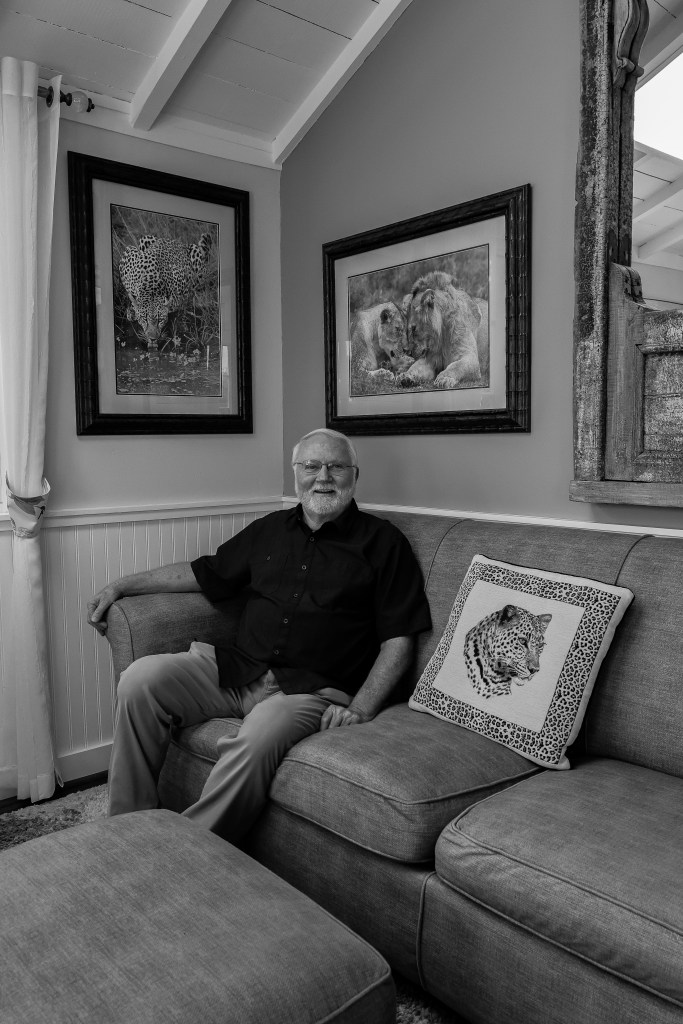
Paul explained how, for him, capturing these moments isn’t just about taking pictures; it’s about connecting with the animals. “When I photograph them, it’s like they understand me. I’ve had elephants that look right into my eyes and it feels like they’re reading my thoughts. It’s hard to explain, but I swear they know when you’re thinking, ‘Don’t hurt them, just be calm.’”
His eyes lit up as he described a particularly emotional scene—watching a group of elephants come together to rescue a baby elephant that had fallen into a steep watering hole. “It’s things like that—watching them take care of each other—that really solidify for me that these creatures have depth. They know what they’re doing.”
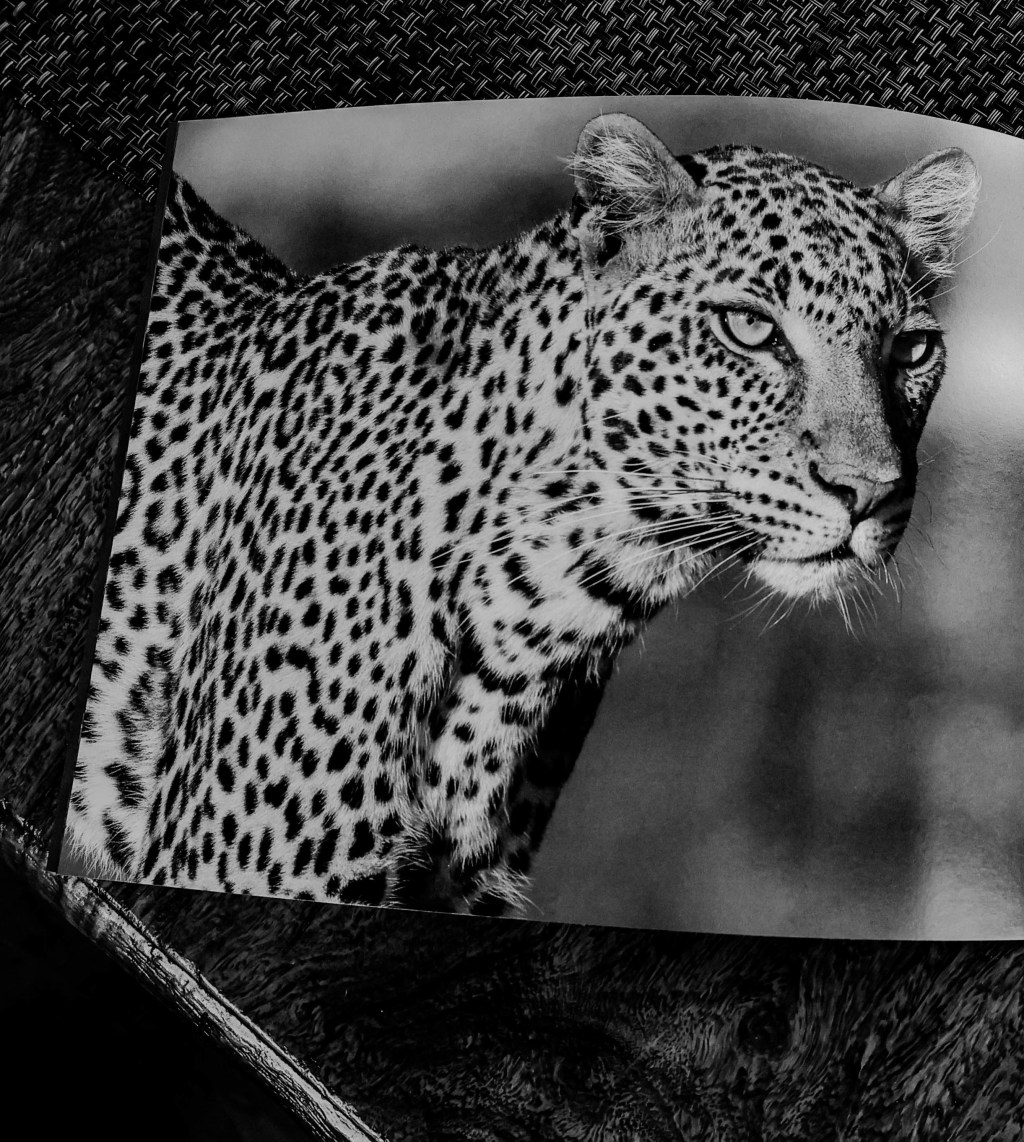
It wasn’t just the big animals that left an impression. Paul also spoke fondly of the more elusive creatures—like leopards. “Leopards are probably my favorite,” he said. “They’re so elusive, so beautiful. It takes patience, sometimes hours, to catch a glimpse, but when you do, it’s magical. And getting the perfect shot? That’s an art in itself.”
Paul reflected on his unique approach to photographing these animals, contrasting it with other photographers, like Thomas Mangelsen, who captures wide shots of animals in their environment. “I prefer the close-ups,” Paul explained. “When you can get that direct eye contact with a leopard or lion, there’s something powerful about it. It’s not just an animal on a branch—it’s a moment of connection.”
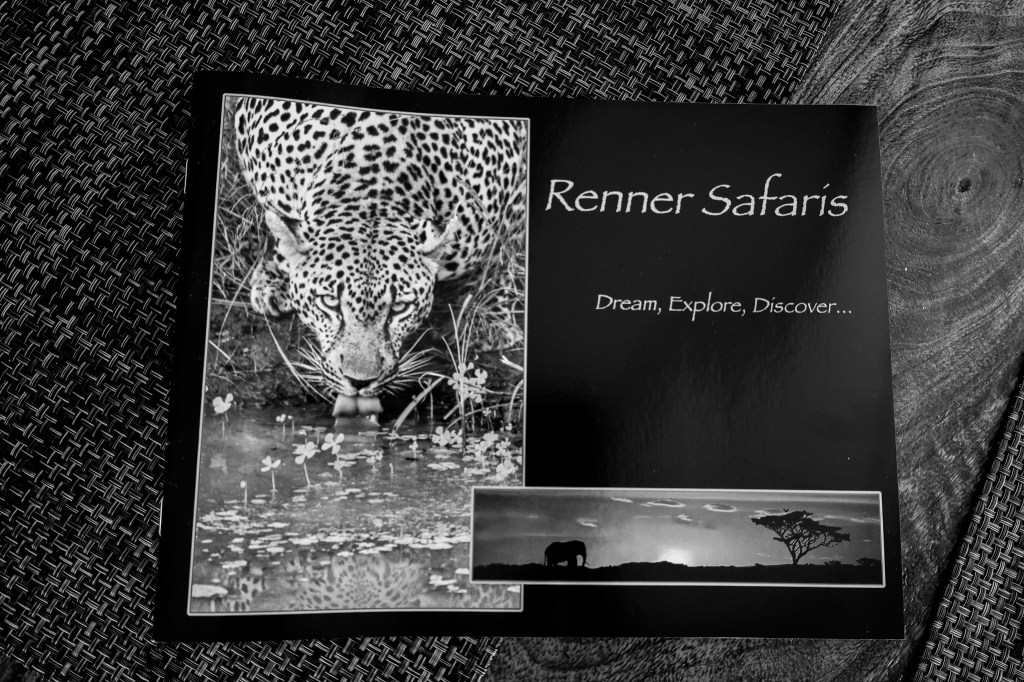
And then, as he shared a particularly memorable moment, Paul spoke of a leopard drinking from a waterhole. “It wasn’t just about getting the shot—it was about the whole experience. He walked up, didn’t look up at me, so I set my camera to take multiple shots. Then, when he finally did look up, I got that perfect shot. I’ll never forget that moment.”
During our conversation, Paul Renner recalled a wild, heart-pounding encounter with a leopard in a cornfield. “So, we were running through the corn when Uncle Fred saw us. He asked, ‘What are you doing in here?’ We thought he had shot the leopard, but he said, ‘I wounded it, and now you’re in here with a wounded leopard!’ We stuck close behind him as we walked, and suddenly, I saw the blood trail leading into thick corn. My heart raced—something was off. I could feel the tension in the air. Then I heard it… a terrifying roar. A leopard. Not supposed to roar. But this one did. And I thought, why isn’t Uncle Fred shooting it? But we were running, screaming, trying to get out fast. After a couple of shots, we jumped on the roof to catch our breath, but for what felt like forever, there was silence. It was then we realized… Uncle Fred had been attacked.”
Paul shared the details of how Fred had tripped, fallen, and been forced to fight off the leopard, saving a man but also getting injured in the process. The leopard had been in pain, its paws and mouth filled with infected porcupine quills, explaining its uncharacteristic aggression. This was only one chapter of Fred’s wild adventures—he was later bitten on the head by another leopard, lucky to survive.
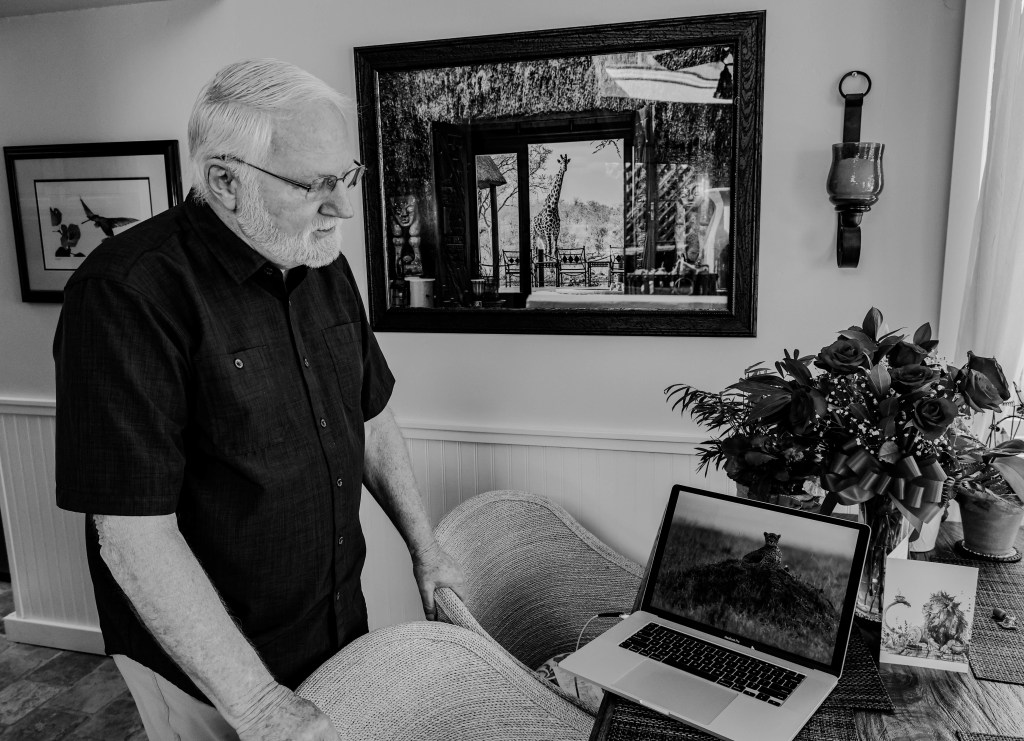
Paul told us more about how these experiences shaped his photography journey. “Fred taught me so much. From the basics of taking pictures to developing film, he shared it all. He was a contractor and built part of a hospital in Africa. More than anything, he was a man who lived by the motto, ‘You never stop learning.’”
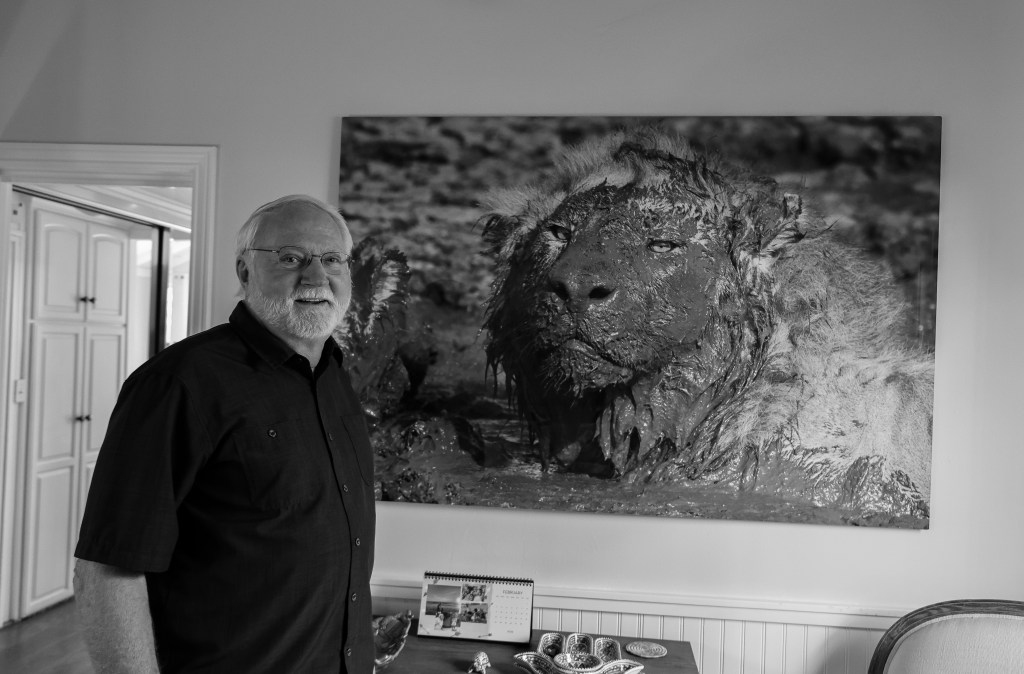
Another harrowing incident he had was with a lion. While on safari, Paul and his group were driving when a lion got so close that its massive head filled the entire window frame of their vehicle. “It roared right outside the car. I was snapping pictures, but I was scared to death,” Paul shared, describing how the lion not only marked its territory by urinating all over the front of the car but also lay down under the bumper, blocking them from leaving. “He was only inches away—right there in the frame, just inches from my face,” Paul added.
Paul also recalled an elephant charging toward their car one evening. As they pulled into a riverbed to watch the sunset, they noticed an elephant grazing nearby. But within moments, it charged straight at them. “It came running, 35 miles an hour,” Paul said, his voice filled with excitement as he recalled how their guide revved the engine to make the car sound larger. At the last second, the driver swerved, and the elephant veered around them. “It was like playing chicken with an elephant,” Paul laughed.
Looking back on his adventures, Paul often says, “I feel like I was cheating life. I’ve been so fortunate.” His photographs capture rare moments of connection with nature, showing a side of wildlife that most people will never experience firsthand.
Reflecting on his career, Paul admitted that his passion for capturing these wild moments has given him opportunities most people can only dream of. “I’ve been lucky,” he said, with a humble grin. “I’ve been able to witness things few people have, and I’m just grateful to be able to share that with others.”

At the end of our conversation, Paul summed it up best: “Wildlife, it’s not just about taking photos—it’s about capturing the essence of these creatures, the real story. They’re not just animals; they’re beings with their own ways of thinking, feeling, and being. And every time I photograph them, I feel like I’m sharing a part of their world with everyone else.”
In his booth at The Sawdust Festival, Paul’s images tell stories, not just of the animals, but of the deep respect he has for the life he’s witnessed through his lens. It’s more than just a safari—it’s a shared experience, one he’s spent a lifetime cultivating, and now he shares it with those lucky enough to see through his eyes.
As Paul’s stories unfolded, it was clear: his adventures and the people he met along the way were far from ordinary. His passion for photography and deep respect for the people and creatures of Africa came through in every detail.
What started as a love for the land and animals turned into a career spanning 91 safaris, taking thousands of people into the heart of Africa. Though he officially retired, demand for his tours never stopped. His deep connection to the land, the people, and the creatures of Africa made his safaris unlike any other.
For Paul, Africa isn’t just a destination. It’s home. It’s adventure. It’s a love that never fades.
#PaulRenner #AfricanSafari #WildlifePhotography #AdventureAwaits #ArtCorner
Renner Safaris – African Photo Safaris – Kenya – Tanzania – Botswana – Front Page
 Art convos
Leave a comment